You close the windows. You clean the floors. You change the bedsheets. So why is someone in your family still sneezing? For many households, the answer isn't necessarily outside. It could be hiding in the dust on a bookshelf, the fabric of a favorite couch, or the tiny particles circulating through indoor air.
On World Allergy Awareness Day, we're looking at something every Tri-Cities homeowner should understand: a home can look perfectly clean and still contain airborne allergens. And with changing seasons, windy conditions, and occasional wildfire smoke affecting our region, understanding indoor air quality is especially worthwhile.
Your immune system is designed to recognize and defend against harmful substances. But sometimes, it reacts to something ordinarily harmless, such as pollen, pet dander, or dust-mite proteins.
For people with allergic sensitivities, exposure can trigger an immune response involving immunoglobulin E (IgE) antibodies and the release of chemicals such as histamine.
Common symptoms include:
Frequent sneezing and a runny or stuffy nose
Itchy, watery eyes
Coughing or throat irritation
Nasal congestion, especially after waking up
Not every cough or sneeze is an allergy. Viral infections, irritants, and other medical conditions can cause similar symptoms. Something worth noticing: If symptoms repeatedly worsen in a particular room or while cleaning, that pattern may offer a clue about possible indoor triggers.
The most common indoor triggers aren't always the ones you can see.
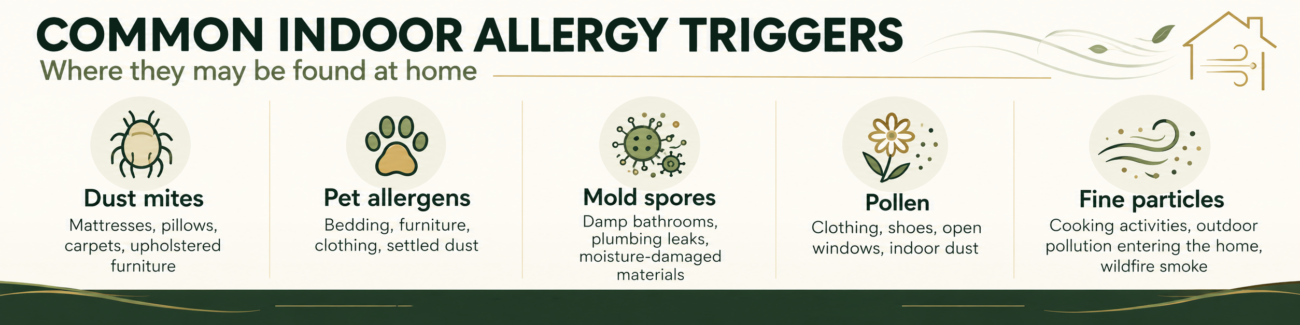
One surprising detail: pet allergens are not simply pet hair. Proteins found in animal dander, saliva, and other secretions can remain in household dust even after visible hair is removed. Similarly, dust mites thrive in environments with sufficient humidity. You don't need to see them for their allergens to be present. That's why managing allergies involves more than keeping surfaces looking tidy.
Residents of Kennewick, Pasco, Richland, and surrounding communities experience seasonal conditions that can influence what enters their homes. Wind can carry outdoor dust and pollen. During wildfire smoke events, fine particulate matter known as PM2.5 can travel indoors through ventilation openings, gaps, and open doors. PM2.5 refers to particles measuring 2.5 micrometers in diameter or smaller. These particles can penetrate deep into the respiratory system.
Here's an important distinction: wildfire smoke isn't necessarily an allergen, but it can irritate airways and aggravate existing asthma or respiratory symptoms. That makes checking local air quality useful even when your home appears clean. Washington residents can follow conditions through the Washington Air Quality Map and AirNow.
Here's where building science becomes especially useful. In a forced-air heating and cooling system, a blower moves air through a filter before distributing conditioned air throughout the home. The filter captures some of the particles carried by that airflow. But how effectively it captures smaller particles depends on the filter's design, efficiency, and the system's operating conditions.
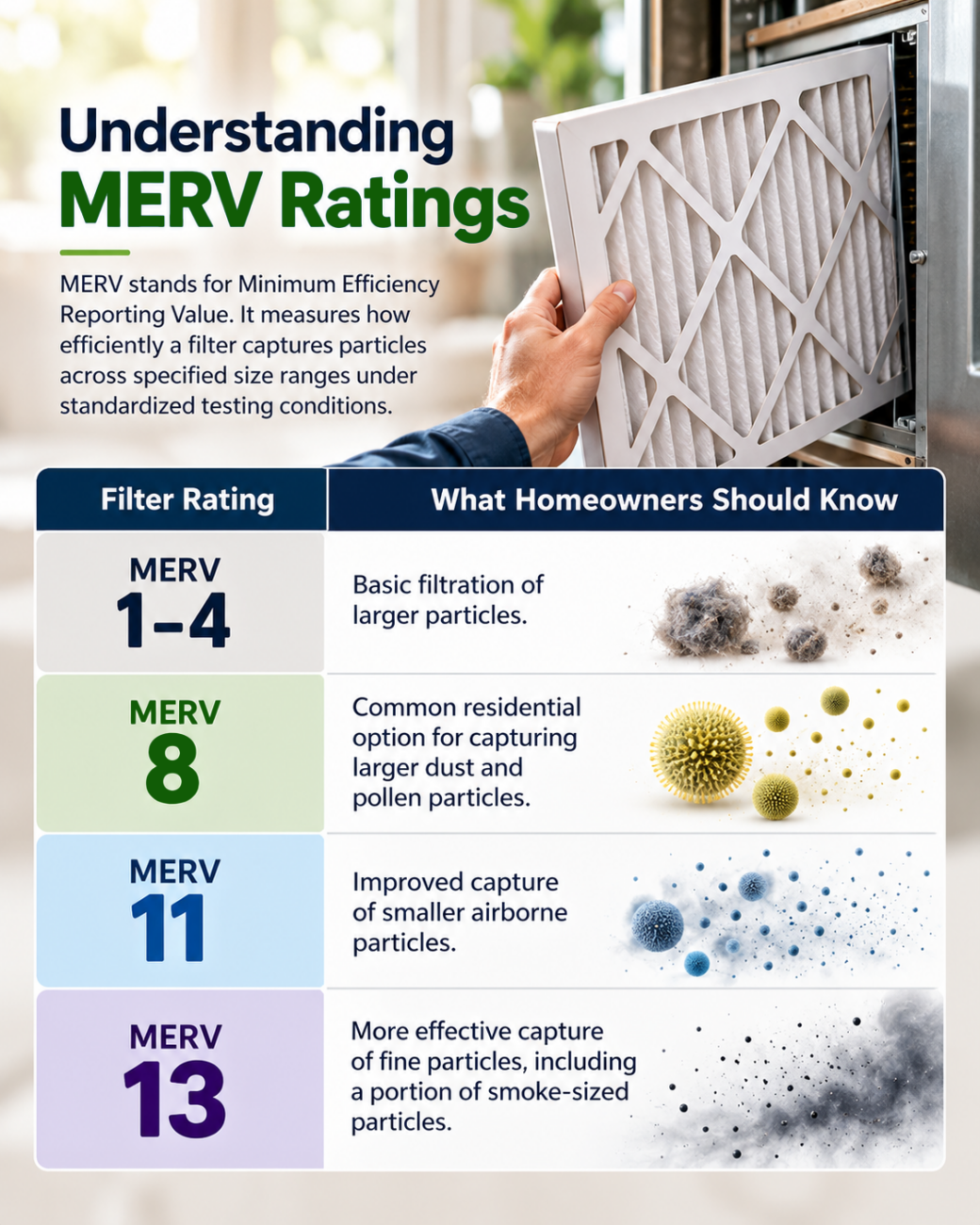
A higher MERV rating is not automatically the right choice for every HVAC system. Denser filters may increase airflow resistance. If a filter is incompatible with the system, it can contribute to inadequate airflow, reduced performance, or equipment problems. The practical takeaway: Consider MERV 13 where the system can accommodate it, but verify compatibility with a qualified HVAC professional rather than choosing solely by the number on the packaging. And remember: filtration only captures airborne particles that actually pass through the filter. It does not eliminate allergens already embedded in bedding or upholstery.
A healthier home starts with the air you breathe. This World Allergy Awareness Day, take simple steps to reduce indoor allergens, maintain your HVAC system, and protect your family’s comfort.
