
Your heat pump works hard to keep your home comfortable through the changing seasons. But have you ever wondered how the same HVAC system can cool your home during a hot Tri-Cities summer and warm it during a cold Washington winter?
The answer involves a small but important component called the four-way reversing valve.
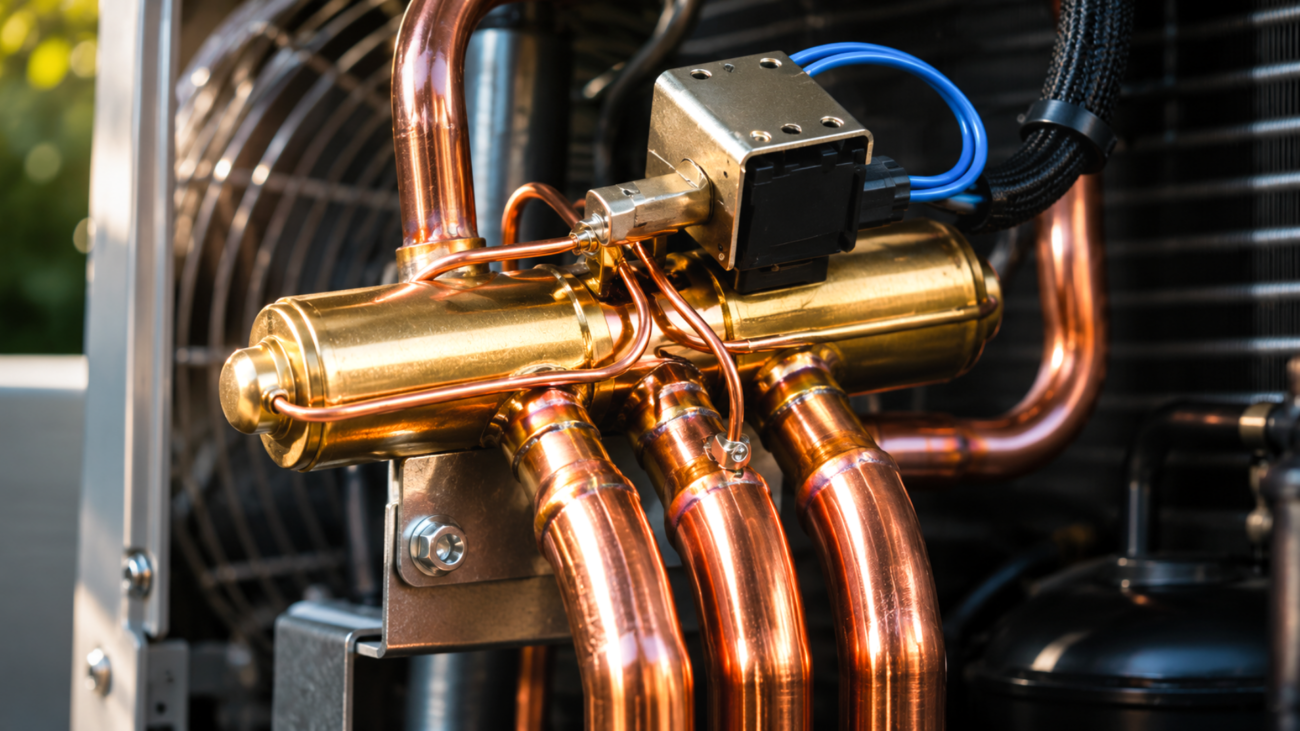
A reversing valve is a component inside many heat pump systems that changes the path refrigerant takes through the system.
Unlike a traditional air conditioner that primarily cools, a heat pump can both heat and cool your home by transferring heat from one place to another.
The reversing valve makes this possible by directing refrigerant through the appropriate coils for each mode.
Even when the air outside feels cold, it still contains heat energy that a properly designed heat pump can absorb.
Here's how the heating process works:
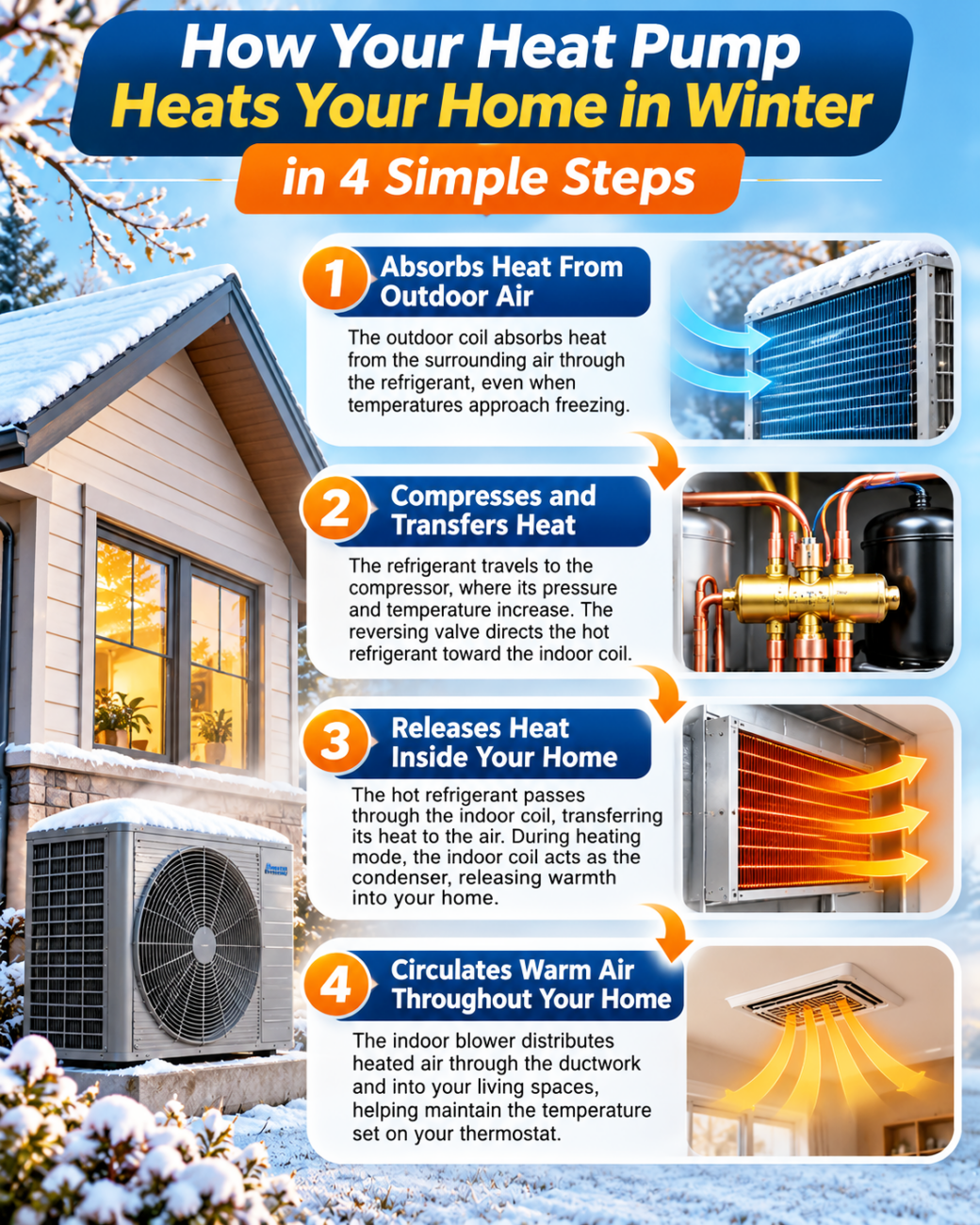
The result: Your heat pump can warm your home by moving heat rather than generating all of its heat through electric resistance.
Winter weather in Pasco, Kennewick, and Richland can bring freezing overnight temperatures, frost, and extended periods of cold air.
During these conditions, your heat pump needs to operate correctly to maintain indoor comfort.
The reversing valve plays an important role in two functions:
Heating operation: It directs refrigerant through the system so heat can be released indoors.
Defrost operation: In many heat pumps, it temporarily redirects refrigerant to help warm the outdoor coil and remove accumulated frost.
A properly functioning reversing valve helps support both processes.
However, heating performance also depends on the compressor, refrigerant charge, airflow, thermostat controls, and overall system condition.
Seeing some frost on your outdoor heat pump during colder weather does not automatically mean something is wrong.
When the outdoor coil becomes cold enough, moisture in the air can freeze on its surface.
To manage frost buildup, many heat pumps automatically enter a defrost cycle.
During this process, the system temporarily redirects hot refrigerant toward the outdoor coil to melt accumulated frost.
You may notice:
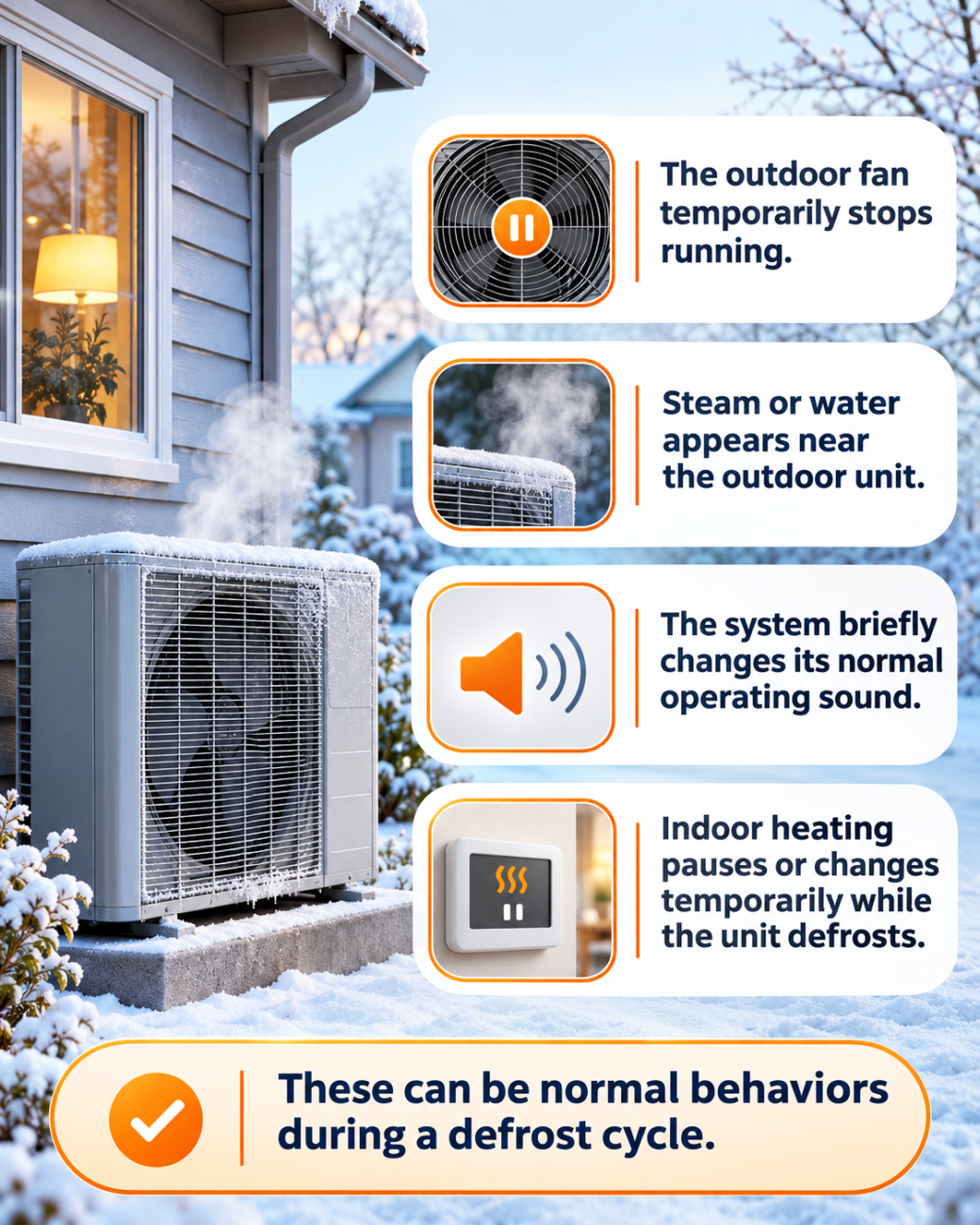
However, if your outdoor unit remains covered in thick ice, repeatedly struggles to defrost, or stops providing adequate heat, professional inspection may be necessary.
Never attempt to chip or break ice off the coils, as this can damage delicate HVAC components.
A malfunctioning reversing valve can cause problems with heating and cooling performance.
Some symptoms homeowners might notice include:
To manage frost buildup, many heat pumps automatically enter a defrost cycle.
During this process, the system temporarily redirects hot refrigerant toward the outdoor coil to melt accumulated frost.
You may notice:
However, if your outdoor unit remains covered in thick ice, repeatedly struggles to defrost, or stops providing adequate heat, professional inspection may be necessary.
Never attempt to chip or break ice off the coils, as this can damage delicate HVAC components.
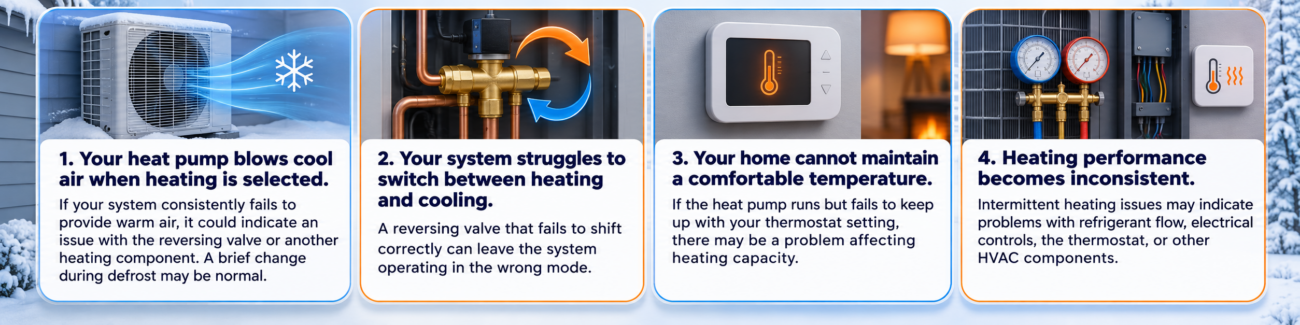
If your heat pump is struggling to maintain comfortable temperatures, blowing consistently cool air, failing to switch modes, or developing persistent ice buildup, it may be time for an inspection.
A reversing valve is only one possible source of heating problems.
Properly diagnosing the entire system helps avoid unnecessary repairs and ensures the underlying issue receives attention.
