
Is your HVAC system running continuously but struggling to maintain a comfortable temperature? The problem could be something you cannot easily see: an incorrect refrigerant charge.
Refrigerant plays an essential role in transferring heat, allowing your air conditioner to cool your home and your heat pump to provide year-round comfort. However, having too much or too little refrigerant can negatively affect system performance, energy efficiency, and equipment lifespan.
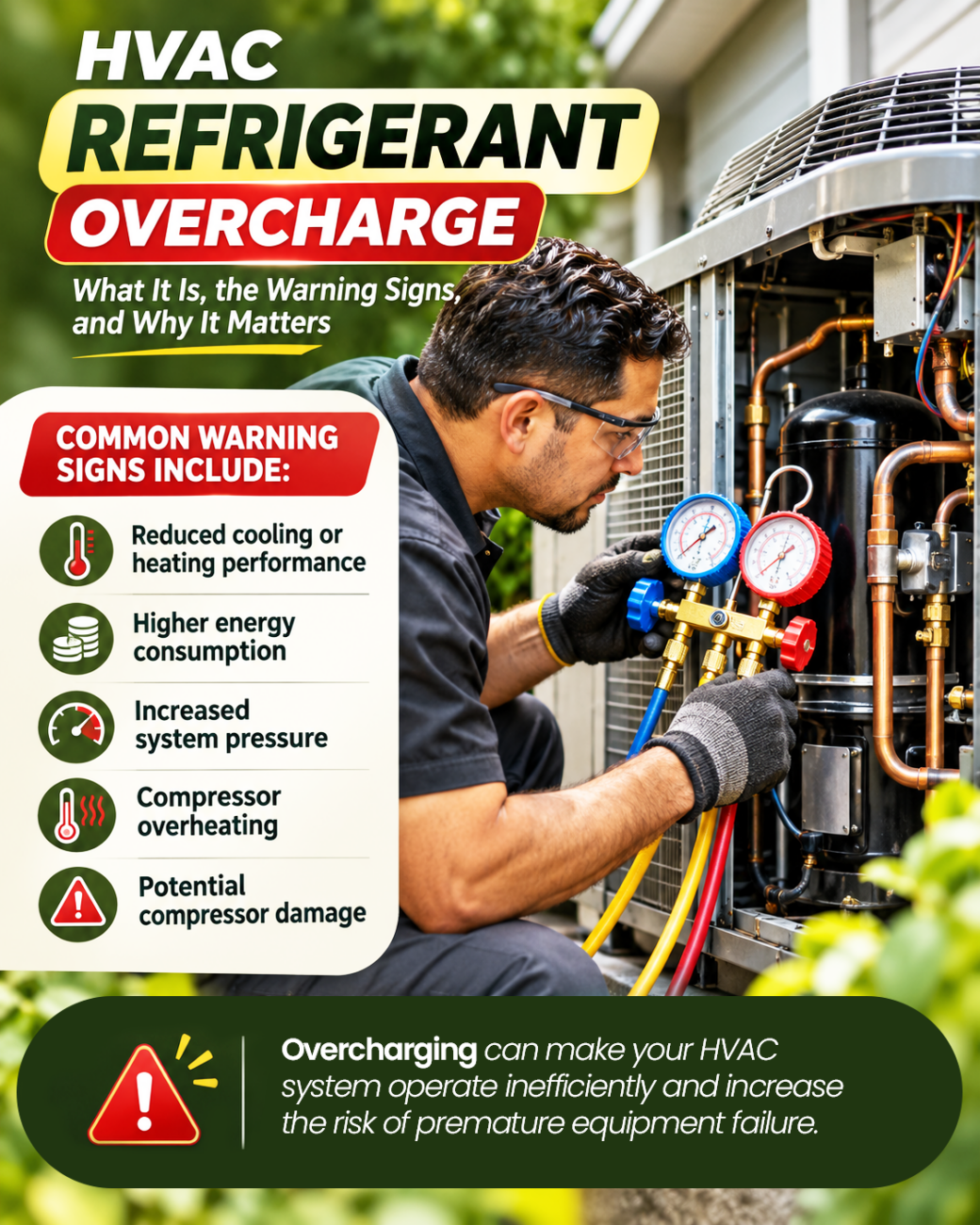
Refrigerant overcharge occurs when your system contains more refrigerant than the manufacturer recommends. More refrigerant does not mean better performance. In fact, it can place unnecessary stress on critical components.
An undercharged system contains less refrigerant than required. This is often caused by a refrigerant leak or an improper initial installation.
Common warning signs include:
Insufficient heating or cooling
Longer operating cycles
Frozen indoor coils during cooling
Reduced airflow when coils freeze
Compressor overheating
Difficulty maintaining indoor temperatures
Refrigerant is not consumed during normal operation. If your system is losing refrigerant, identifying and repairing the underlying problem is essential.
Both overcharging and undercharging can compromise your comfort system.
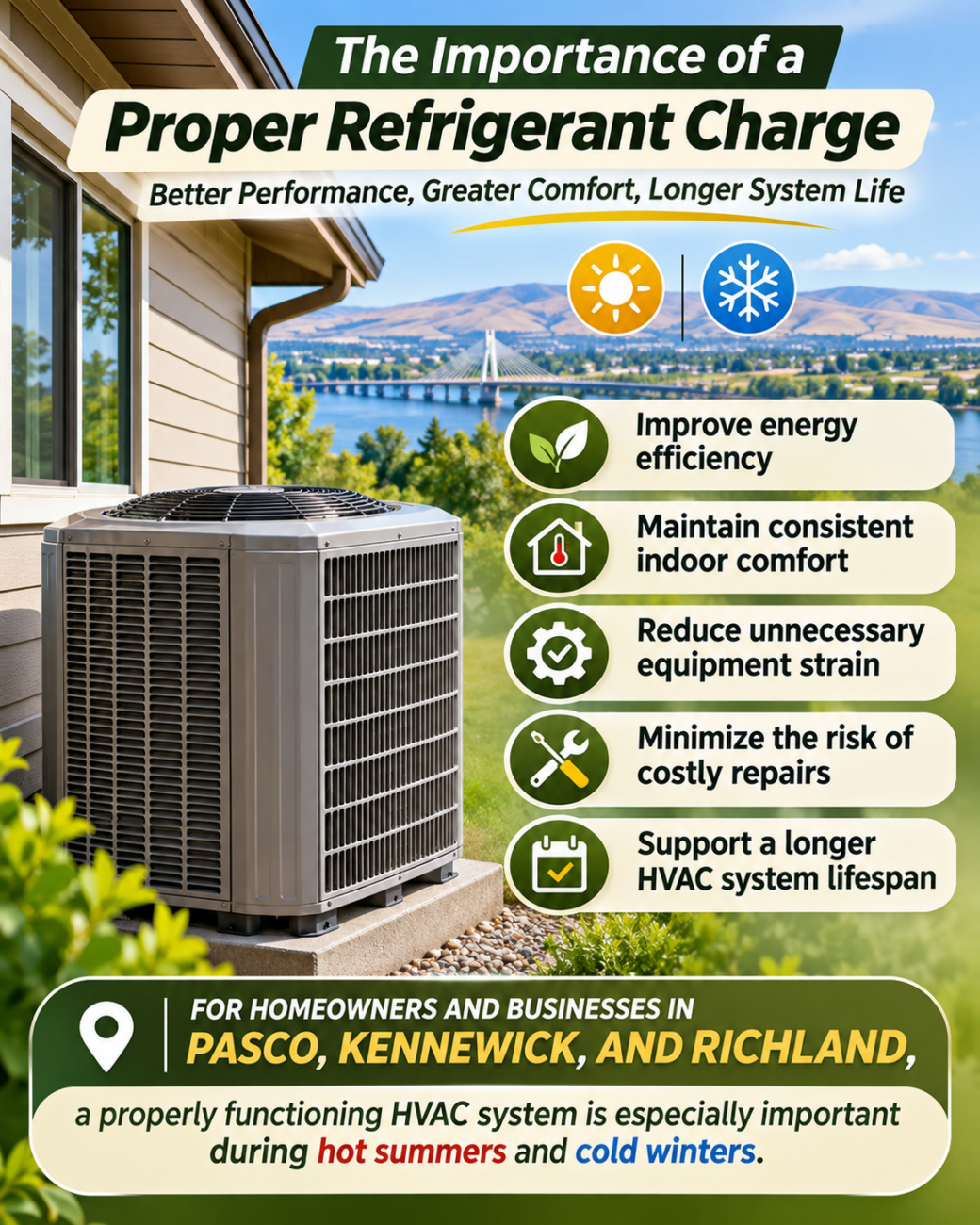
Maintaining the correct refrigerant charge helps:
A qualified HVAC technician evaluates system pressures, superheat, subcooling, airflow, operating temperatures, and compressor performance according to the manufacturer's specifications.
Because other HVAC problems can produce similar symptoms, a professional diagnosis is important before adding or removing refrigerant.
Your HVAC system should provide comfort, not constant frustration or unexpected expenses.
If you notice inconsistent temperatures, unusual system performance, or rising energy bills, consider scheduling a professional HVAC inspection.
